Behind the Content: Why Your Premium Healthcare Brand is Dropping Capital on External Band-Aids (and the Systems-First Fix)
We need to talk about the marketing noise.

If you open LinkedIn or check your inbox right now, you are likely being inundated with urgent messages about what your healthcare organization or group practice must do to survive. One expert says you need thousands of dollars in Google Ads. Another insists you must optimize for AI Search. A third promises that a pre-packaged website template will automatically solve your acquisition and staffing problems overnight.
Lately, there is a massive push telling you that you need to be dominating social media—that you need to spin up a TikTok, an Instagram, a Threads account, or a Facebook page and start churning out content because "that's where the eyes are."
It is exhausting. And worse, it is rarely specialized for the regulatory, clinical, and human realities of healthcare, wellness, and mental health. When you hire generalist agencies, they look at your organization from the outside looking in. They see raw metrics, high-volume keywords, and generic trends. They don’t see the structural framework beneath your ceiling.
I look at this through a completely different lens.
Before I stepped fully into my private counseling practice, enterprise consulting, and employee wellness work, I spent years in the trenches of marketing. Once upon a time, I worked inside a high-level healthcare and mental health SEO firm, doing everything from internal program building and blogging to technical optimization and coding. I later launched and maintained my own agency, Blue Wings SEO. While digital marketing eventually stopped being my primary love, that foundational expertise never left. I still maintain an active footprint, consulting on retainer for select brands.
What makes my work stand out as an operational consultant isn’t just that I understand business development or clinical workflows—it’s that I understand exactly how marketing, staff empowerment, and internal systems intersect.
The Critical Boundary: I Am Not Your Marketing Vendor
Let’s set a definitive boundary right now: I do not do SEO execution anymore. It is not my passion, and I do not offer marketing fulfillment services. When healthcare leaders discover my background, they often get caught up in a knot, wanting to hand over their keyword tracking, social media calendars, or ad management to me. I don’t take those keys.
What I do do is use my specialized marketing insight to prevent you from being taken advantage of by generalist agencies that don’t understand your field. I don't look at your marketing to write your copy; I look at it to diagnose your business. If your marketing isn't working, it’s almost always an indicator of a deeper, systemic gap inside your organization.
Too many high-level organizations are throwing immense capital at external marketing solutions to fix deep, internal systemic wounds. As a former specialist who now audits organizational workflows, here is exactly what I would never recommend you do, and what you need to look at instead.
1. Pouring Capital Into Google Ads to Solve a Staffing or Acquisition Crisis
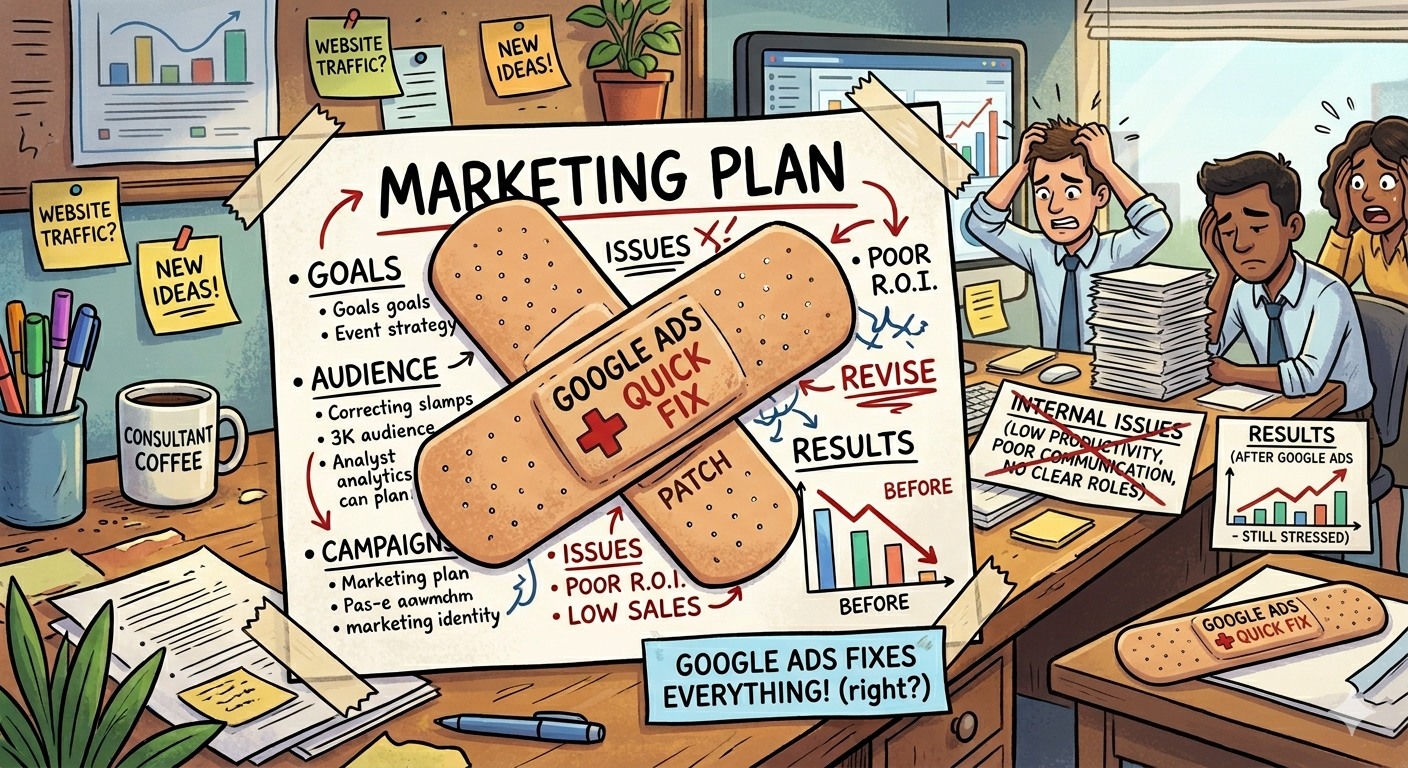
When client numbers dip or you are desperate to acquire qualified clinicians, the immediate temptation is to turn on the faucet of paid advertising. "If we just pay thousands of dollars to Google Ads, the right people will walk through the door."
Here is the truth: Google Ads will not fix a broken internal workflow.
If you are pouring money into top-of-funnel acquisition but your internal infrastructure is unstable, you are just accelerating your operational friction. If your documentation lag is out of control, if your administrative support is misaligned, or if your workplace culture is driving clinician burnout, those expensive leads will exit just as fast as they entered.
Using paid ads to solve a systemic retention problem is like putting a small band-aid over a deep, open wound. It might cover the issue momentarily, but the second that band-aid is ripped off prematurely, the unhealed wound is still exactly where you left it. You cannot buy your way out of an unsustainable internal system.
2. Buying Generic Templates and Expecting Specialized Results
There is no shortage of pre-packaged website templates marketed specifically to therapists and healthcare practices. They serve a baseline purpose when you're starting. But as your organization grows, matures, and scales toward high-level Consulting, Coaching, or specialized clinical tracks, a generic template stops serving your vision. You eventually reach a ceiling where you require independent hosting, a custom web designer, and architecture built for your specific workflow.
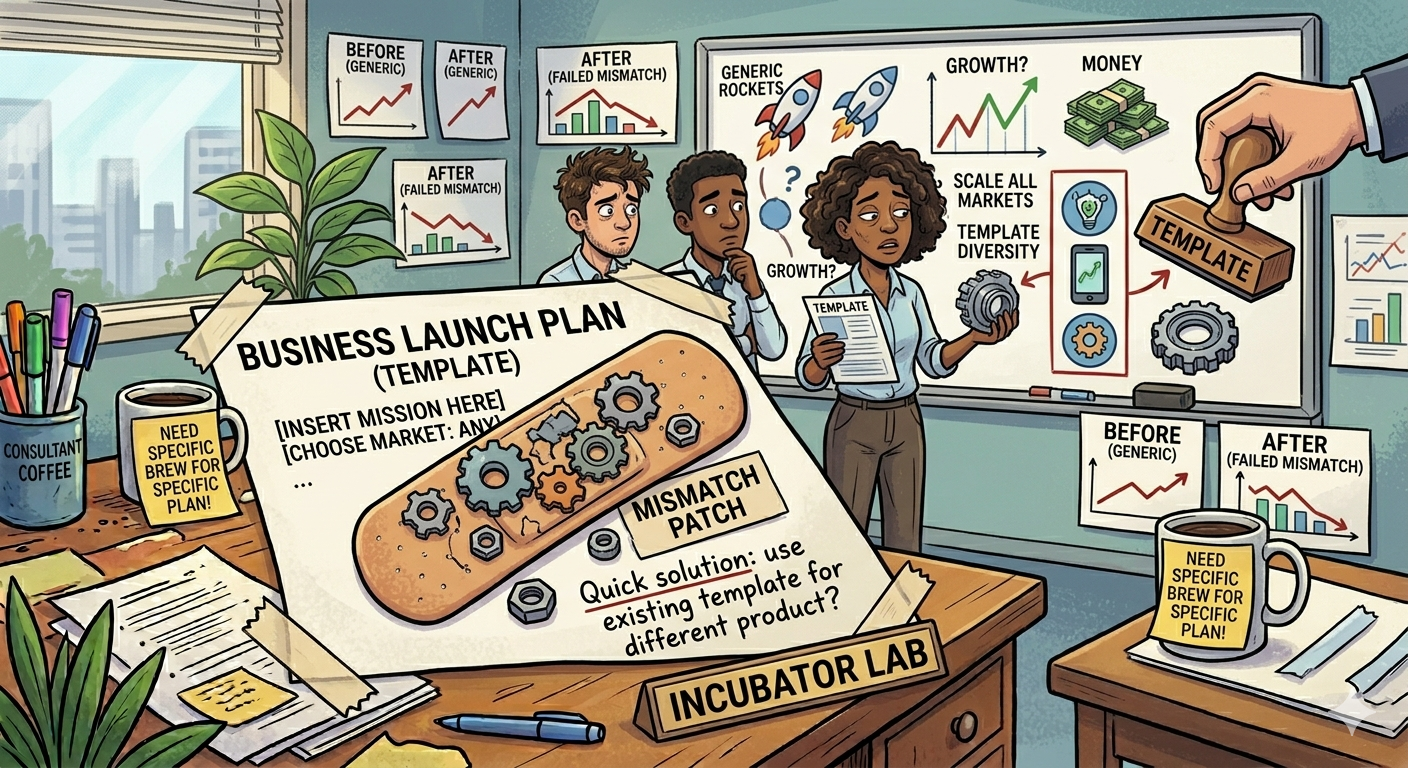
More importantly, you cannot generalize your brand and simultaneously expect highly specialized, perfect-fit people to find you. This applies to both the clients you want to serve and the clinicians you want to hire:
The Hyper-Local Nuance: Ranking for "therapy" or "healthcare clinic" in a massive, dense market—whether that is Texas, California, New York, Hawaii, Florida, or right here in the Chicago area—requires deeply localized authority. A generic template doesn't understand the cultural, geographical, and regional nuances of your specific community.
The Specific Avatar: If your website copy is written to please everyone, it will move no one. High-performing practitioners and premium clients don't align with clichés or academic jargon. They want to see their exact experiences, values, and clinical philosophies reflected in your branding.
I hear it all the time: "But I didn't go to grad school or earn my doctoral degree to write content or think about SEO." I completely understand. Writing copy can feel like an inconvenience when you want to focus entirely on clinical execution. But if a temporary moment of operational inconvenience is what connects you to the exact staff and clients you need, it is worth doing. And if you genuinely do not want to write it, that is precisely when you hire highly specialized outside help to support your vision—not a generalist template.
3. Relying on Social Media Streams as Your Constant Lead Pool
SEO doesn't just exist on Google; it exists on social media platforms, too. TikTok, Instagram, and Facebook all run on their own native SEO search algorithms, and they behave entirely differently from traditional search engines.
One of the biggest mistakes I see healthcare leaders make is spinning up social platforms and expecting them to become a consistent, reliable stream of high-value clients.
Social media marketing requires a highly specific, intensive strategy. To find actual conversion success there, you have to stay constantly on top of rapidly shifting trends, create messages that hook an audience instantly, and fight for the attention of users who have incredibly low attention spans. People scroll through TikTok or Instagram because they are bored; they are looking at relationship videos or entertainment. If they happen to stumble across a video about your Direct Primary Care (DPC) model or specialized clinic, they might double-tap it, they might even save it, but then they move on with their life. They aren't in a buying or committing mindset.
It takes an immense amount of time, energy, and continuous presence to build true clinical authority and pull consistent, paying clients from a social media algorithm.
For the vast majority of premium healthcare practices, clinics, and hospitals, the most powerful driver of authority, expertise, and client acquisition is still word of mouth, authentic face-to-face networking, and deep existing business connections. People want an authentic, human experience when it comes to their health and leadership—not a viral video.
Ask yourself honestly: Does the way your private practice, clinic, hospital, or program is structurally set up actually make sense for social media to be your primary marketing strategy? If the answer is yes, that's fine—but you need to hire a dedicated specialist who can build that strategy over time. But if the thought of it leaves you feeling exhausted, and you don’t want to be forced to record another video or spend your evenings responding to random comments just to please an algorithm, give yourself permission to step away from it. Find the specific, intentional marketing mix that allows you to be highly impactful without draining your personal capacity.
The Reality Check: Systems Impact Everything

At the root of this entire discussion is a single truth: Systems matter, and systemic impact is everywhere. When I talk about systems, I'm not just talking about software or spreadsheets. I’m talking about the invisible frameworks that dictate how we function. Some macro-systems impact us outside of work, institutional systems that run within a workplace, and microscopic systems that control our day-to-day lives—right down to the execution of your morning routine.
Every single system you interact with or build is either driving health or supporting dysfunction.
There is an absolute need to know why we are doing what we are doing. If a system in your life or business is not working, we cannot keep ignoring it; we have to change it. And if we don't know what we're doing or where the leak is, we have to be willing to ask deep, diagnostic questions to gain clarity.
I am a naturally curious person. That baseline curiosity is exactly what makes me fascinated by building workflows that actually work for human beings. I thrive on uncovering systems that don't work and engineering solutions that are profoundly effective.
To be completely candid, that is why SEO used to make my brain so happy. It is a beautiful, logical puzzle. It is incredibly fun to see a problem, apply a precise structural strategy, and see it work in real-time—or to watch it fail, analyze the data, pivot to a new system, and watch it succeed.
While I am no longer in the marketing execution space, that problem-solving drive is exactly what I bring to your organizational table. I use the insights gained from years of marketing agency ownership and corporate consulting to help you understand why you are building your current infrastructure.
What does it actually look like for your brand to have an aligned marketing strategy? What does it look like to have an internal operational framework that supports your people daily?
You don't have to navigate these questions blindly, and you don't have to keep wasting capital on external agency band-aids. You just need to build a better system for yourself.
Apply to Work with Chaneila Consulting Group!
If you are ready to stop chasing vanity marketing metrics and want to look under the hood at the actual root causes of your organization's operational friction, administrative bottlenecks, or team burnout, apply to work with us for a custom Systemic Diagnostic Audit.
Other Services Chaneila Consulting Group
Here at Chaneila Consulting Group, we offer many services for individuals, groups, and organizations.
